EN
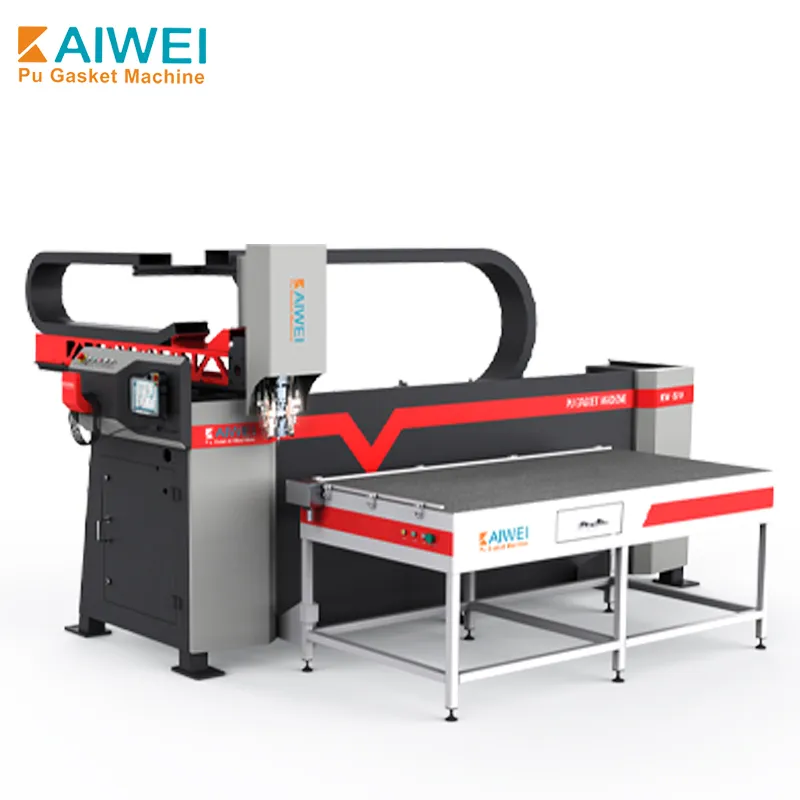
One of the most important choices to help answer whether to use a semi-automatic or fully automatic adhesive dispensing system in an industrial assembly process is to assess the trouble level of the operator. This option has a major effect on the initial investment, operational costs, production capacity, and quality assurance. Both the prices and the unique value that each option offers are critical when making an educated guess on what to buy and how much to spend on your production needs.
Initial Investment and Core System Costs
The big difference is the initial system setup cost between a semi-automatic and a fully automatic dispensing system. The typical price for a semi-automatic system is between $2,500 and $35,000, which varies based on how many features and how complicated the system is. Typically, these systems contain a simple mechanical or manual part handling element, a material supply system and a basic controller, and valves to dispense the material. They are intended for lower quantity production applications where the operator does not mind working with the machine and the required precision level isn't too high.
In contrast, fully automatic solutions range anywhere from $7,000 to $120,000 or even more. The price is higher due to the incorporation into a robotic system of motion systems, multi-axis control units and advanced software as well as the automation of material handling. When there is a need for dispensing to be done consistently, repeatably, and with minimal operator involvement, a full automatic dispensing system may be warranted given the productivity savings and improvement in the quality that it provides in higher volume production applications. The disparity in price isn't just random: it reflects the extra engineering, hardware and software demanded to get to unattended modes and/or higher throughput.
Precision, Speed, and Throughput Capabilities
Semi-automatic systems have acceptable levels of precision which is fine for many uses, but require skill from the operator to maintain precision. Even if the positioning accuracy of some semi-automatic systems is at an acceptable level, it cannot be compared to the repeatability that can be found in fully automatic systems. Transferring and unloading workpieces, setting up each dispensing cycle and viewing the results visually—all factors that add to variability and can reduce cycle times.
Fully automatic systems automatically integrate precise metering pumps, closed-loop feedback control and servo-controlled motion systems and guarantee positioning accuracy of ±0,03mm or less. They offer consistent speed of dispense and material output, no matter how tired the operator is, or how often they change shifts, giving exceptional part-to-part consistency. These systems are able to run continuously, and sometimes with automated loading and unloading of the workpieces, significantly boosting production capacity. High volume production or high volume contracts are where the speed and accuracy of a fully automatic system is the determining competitive factor for manufacturers.
Material Waste and Operational Efficiency
Efficiency of materials is one aspect that can be overlooked and end up having a major impact on TCO. There can be a higher level of material loss with semi-automatic systems because of differences in user technique, operating procedures and the requirement for more frequent cleaning cycles. Manual purging and cleaning can be less effective than automated purging and cleaning and may result in degradation of the material or contamination to the next production lot.
Minimize material wastage by using a fully automatic dispensing machine with a built in cleaning and purging device. Each cycle the dispensing head is automatically cleaned so there's no need for purging, which helps to control material loss. For a two component materials, precision metering pump accurately meters the A:B ratio in order to eliminate off-ratio material in production and eliminate waste. These cost savings can make up for the additional upfront cost over the course of a year of production.
Long-Term ROI and Payback Analysis
The prototype incubation time for upgrading from semi-automatic to fully automatic dispensing will vary based on output level and labor expenses. In high volume operations, ROI may be achieved in months instead of years. For instance, when the two human operators are replaced by a fully automatic system, your first $40,000 to $50,000 in labor expense is saved every year – not counting the benefits of yield improvement and material waste reduction. The incremental investment is rapidly recovered at this rate.
In addition to automatic systems, there are semi-automatic systems that may provide a better return on investment for lower-volume operations. Semi-automatic equipment may have an advantage when production runs are short, and the product changes frequently, due to the flexibility and lower capital costs. For some manufacturers an upgrade to fully automatic systems, for quality, decreased inspection costs, allows them to take larger orders and that outweighs the cost of moderate volume production.
Consider all factors, including purchase, Installation, Training, Maintenance, and potential downtime, when comparing TCO. A fully automatic system usually needs more extensive training but can also provide greater diagnostic and monitoring capabilities, thereby minimizing system downtime and maintenance expenses. A system from a trusted brand with full after-sales services, such as operator training and remote diagnosis, can help achieve a maximum return on investment for both types of systems.
Conclusion
Adhesive Dispensing Systems are available in two types, either semi-automatic or fully automatic systems, and the selection will vary based on production volume, precision needs, capital access and long-term strategy. These systems are less expensive and can be used for lower volumes of production, or applications that require flexibility. Investing in fully automatic systems is more expensive but offers increased throughput, precision, material use, and will likely pay off faster in high-volume applications. By understanding manufacturing needs and applying TCO to fit the system to the specific application, manufacturers can choose the system that best meets their needs and applications while offering a reduced total cost of ownership.