EN
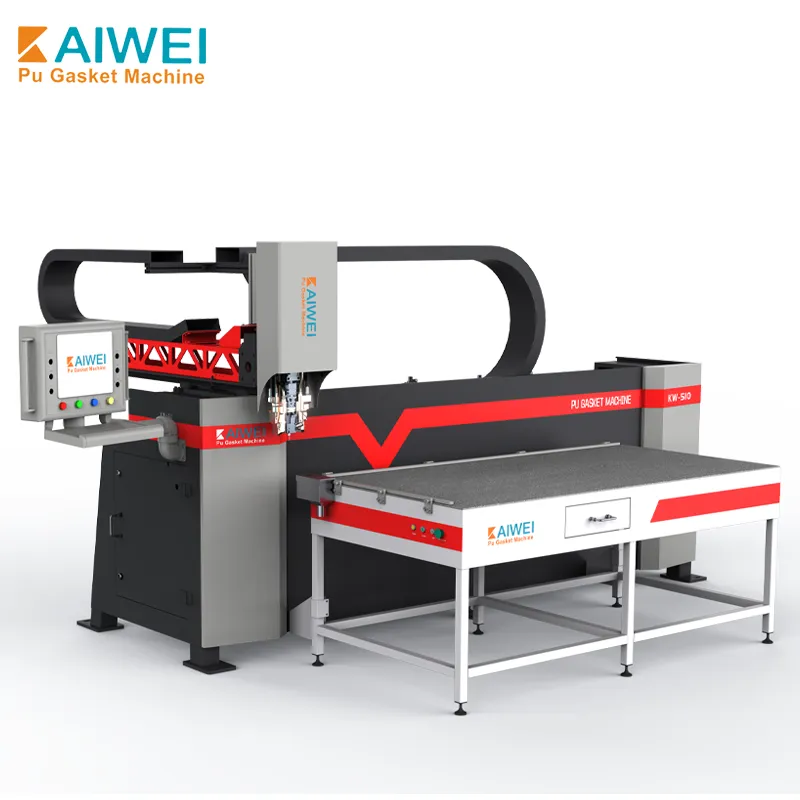
The price of an adhesive dispensing system is seldom quoted as a single number, when assessing an adhesive dispensing system for an industrial assembly line. Many variables (such as fluid type, production speed, tolerances, and maintenance requirements) can affect the cost of a dispensing system. By understanding these factors, manufacturers can make informed decisions on investments that optimize upfront costs while achieving the highest operational efficiency and cost of ownership.
Dispensing Technology and Application Requirements
The key piece of systemic cost that determines dispensing technology is the type of dispensing technology chosen. Use cases vary in precision: the more precise they are, the more complex the hardware. Manual dispensers can be used for simple single components such as oils or greases and can cost as little as $950. Multidispensing products, with prices beginning at $35,000 for more complex products. Each element of a typical dispensing system, including pressure tanks, valves, controllers and material supply systems, contributes to increasing the cost of the system.
Dispensing technology fundamentals also influence cost. A distinction can be made between the levels of automation for the fluids being dispensed, whether one-part adhesives, two-part epoxies or polyurethane foams. The cost of manual or semi-automatic systems is much lower than the cost of fully automated systems. Price rises in automated systems with the number of axes, complexity of dispensing head and dispensing precision of the pump. Type of valve (dispensing, spray, or jetting) also plays into cost: dispensing valves are typically the simplest, spray valves can achieve high speed and non-contact, but are expensive, and jetting valves offer high speed and non-contact at a cost premium.
Fluid Properties and Material Compatibility
Physical and chemical characteristics of adhesive or sealant directly affect adhesive system design and costs of dispensing. A thixotropic fluid is a fluid which decreases in viscosity under shear stress and will respond differently to pressure and time and specially designed pumps are required. High-viscosity fluids need pumps that have a larger displacement and can pump at higher pressures, which can add to the overall system cost. There are a variety of materials types available and each one ought to be regarded with regard to its applications to a specific project specific needs.
Abrasive or filled materials cause more rapid wear on pumps, valves and fluid transmission lines, which leads to greater durability requirements of the materials. Here, often, stainless steel or tungsten carbide fluid paths are used for these fluids, which add considerably to the fluid path system costs . If the material used is a UV-curable or reactive system, the curing must be prevented, leading to additional difficulty and expense in the system design.
Production Speed and Automation Level
Required production throughput plays a significant impact on system price. Produce very quickly on high-volume assembly lines calls for higher dispensing rates, and necessitates a more complex motion system and metering technology. As long as it needs to run in a high-speed environment, the systems are more expensive as compared to those operating at lower cycle rates.
Automation level is another critical factor. The price of manual and semi-automatic systems ranges between $2,500 and $35,000, and fully automated systems have a price range of $7,000 to $120,000 or higher. The price of automation is due to having to invest in the robotic integration, multi-axis controllers, and software. The optimal industrial dispensing system is usually a combination of several different technologies and will become more complex depending on the application's requirements and the level of automation.
Customization, Integration, and After-Sales Support
Besides the equipment itself, system customization, integration and support costs are a significant part of the investment involved in a system. Unique production requirements may not be met using a standard dispensing system solution which can impact on price. This may require extra safety enclosures, special fixturing, special software, etc. to increase cost. The downside is that customization investments can yield better efficiency and better product results—even though there is an extra expense.
Integration with existing production lines presents another cost layer. Dispensing systems require communication with PLCs and robots, as well as with conveyors, and quality inspection equipment. The integration generally comes with a price tag as it involves custom programming and extra equipment. The overall system integration costs may be substantial, especially if integration is required within an existing line.
Long-term support and training also factor into the investment decision. Some suppliers will deliver basic training and standard cover warrantees, others will give complete training packages that involve training your staff on site, warranty packages that are extended and remote monitoring. These services involve added start-up costs, but their value may be significant when it comes to value of the total cost of ownership, as they generally help to lower downtime and enhance the effectiveness of the operator. For instance, the "Kai Yixue" mini-program meets the needs of convenient learning and technical training of the customers, thus enhancing the learning process and putting down the learning threshold.
Conclusion
By gaining insights into the elements influencing the price of adhesive dispensing systems, manufacturers can make informed choices. Initial costs are high, but long-term gain can be expected for increased quality, throughput and reduced material utilization. The critical step in having a return on investment is to achieve the right length of "return", which is done by matching the system's specification to the actual production requirements. Textile and texture measurements are relevant when assessing suppliers, and take into account things like integration, support and lifecycle maintenance. Although cost is the starting point, what really matters is the system's ability to consistently provide quality dispensing over its long life cycle.