EN
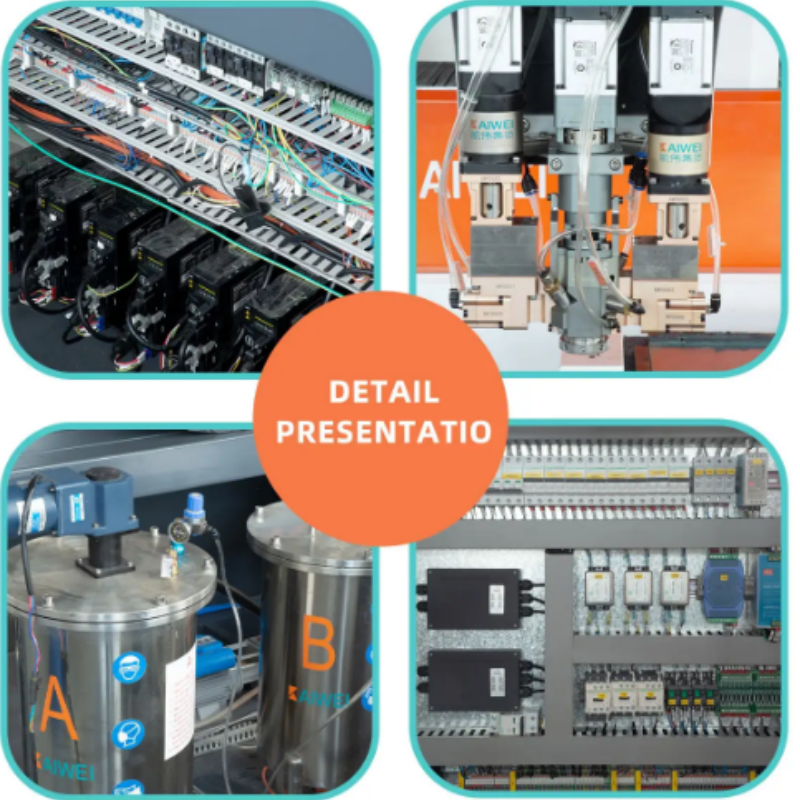
Manufacturers have to make a fundamental decision when it comes to polyurethane foam processing equipment: they can choose between high and low pressure. Although low-pressure machines seem to be more affordable, performance in terms of several factors directly affecting product quality, productivity and profitability of business is superior for high-pressure polyurethane foam injection machines. As company with 20 plus years experience in intelligent sealing and dispensing equipment, KAIWEI Technology Group has seen the power of high pressure technology firsthand. The following are the main benefits of high pressure systems over their low pressure counterparts.
1. Superior Mixing Quality Through Impingement Technology
The most basic benefits of high-pressure polyurethane foam injection machines are based on their mixing principle. In high pressure systems the two components, polyol and isocyanate, are oppositely injected at high pressure (100-200 bar) and then mixed together by impingement. These streams merge together at high speed in a narrow chamber, resulting in very turbulent flow and instant molecular-level mixing, without any mechanical components.
In contrast, low-pressure machines use mechanical stirrers that spin at high rate of speed (3,000-6,000 RPM) in larger mixing chamber. The mechanical mixing generates laminar flow and cannot even approach the homogeneity of high pressure impingement. This yields an appreciable foam quality difference: high pressure produce very fine and uniform foam cells of diameter 150-300 micrometers whereas low pressure mixed foam has typical cells of diameter 400-600 micrometers. This exceptional cell structure directly results in improved thermal insulation properties, up to 15% reduction in the thermal conductivity of insulation panel applications.
2. Solvent-Free Self-Cleaning Operation
A key benefit of the high pressure systems is their self-cleaning ability. They need to be flushed with solvents like Methylene Chloride after every pour in low pressure machines to remove any chemicals that may set up and clog the machine. This solvent rinse introduces the extra cost of solvent disposal, reusability, and introduces 30 to 90 seconds of cycle time per shot.
This requirement is completely eliminated with high-pressure polyurethane foam injection machines. A hydraulically driven cleaning piston automatically cleans the mixing chamber at the end of every injection cycle. No solvents are used, which means the process is faster, cleaner and meets strict environmental laws and regulations like REACH and EPA standards. If 300 shots are being produced per day, and 60 seconds are being spent cleaning each shot, the time saved in cleaning that shot puts back over 5 hours of productive machine time day, without any investment in new machines.
3. Precision Metering and Mixing Ratio Accuracy
The most important variable in the manufacture of polyurethane foams is the ratio of polyol to isocyanate. The differences of 2-3% from the target index measurably alter the foam's compressive strength, thermal conductivity and dimensional stability. The ratio accuracy of high-pressure systems is better than ±1%, which is not possible using low pressure equipment.
This precision is made possible by high accuracy gear pumps or piston metering pumps with flow rate feedback loops which automatically compensate for viscosity changes due to temperature fluctuations. Polyol and isocyanate are kept in temperature controlled component tank with tolerance of ±0.5°C from the set point to achieve consistent material properties. PLC-based control systems continually compare actual to desired ratios and alert person to any ratio variances that could result in out of specification product. Our high pressure equipment at KAIWEI is designed to be programmable, enabling easy switching between rigid foam, flexible foam and structural foam formulations with accuracy of repeatability.
4. Faster Cycle Times and Higher Production Throughput
Also, the self-cleaning feature and quick injection speeds make high pressure machines much faster than low pressure machines. The high pressure mixing heads open and close in less than 0.1 seconds, and do not require any solvent clean between shots. This eliminates mechanical mixing and cleaning cycles that slow the low pressure production.
The gain in productivity is significant. Low pressure machines generally can deliver up to 8 kg/min and high pressure machines can deliver more than 30 kg/min. This means 30–50% greater efficiency of production in high volume manufacturing. This reduces material waste (usually around 10-20% less than low pressure systems), making it more cost effective. The startup cost of high pressure equipment is greater, however the material, labor and solvent savings make the initial investment quickly pay off for established manufacturers.
Conclusion
The major benefits of high-pressure polyurethane foam injection machinery over low pressure machines are the mixing quality with impingement technology, the solvent-free self-cleaning process, the metering accuracy and the much quicker cycle times. These advantages bring increased product quality, decreased operating costs and improved production efficiency. Our high pressure equipment provides all these benefits at KAIWEI Technology Group with CE, ATEX and ISO 9001:2015 certification. Join us in taking your polyurethane processing to the top of the professional world, with high performance and efficient solution.