EN

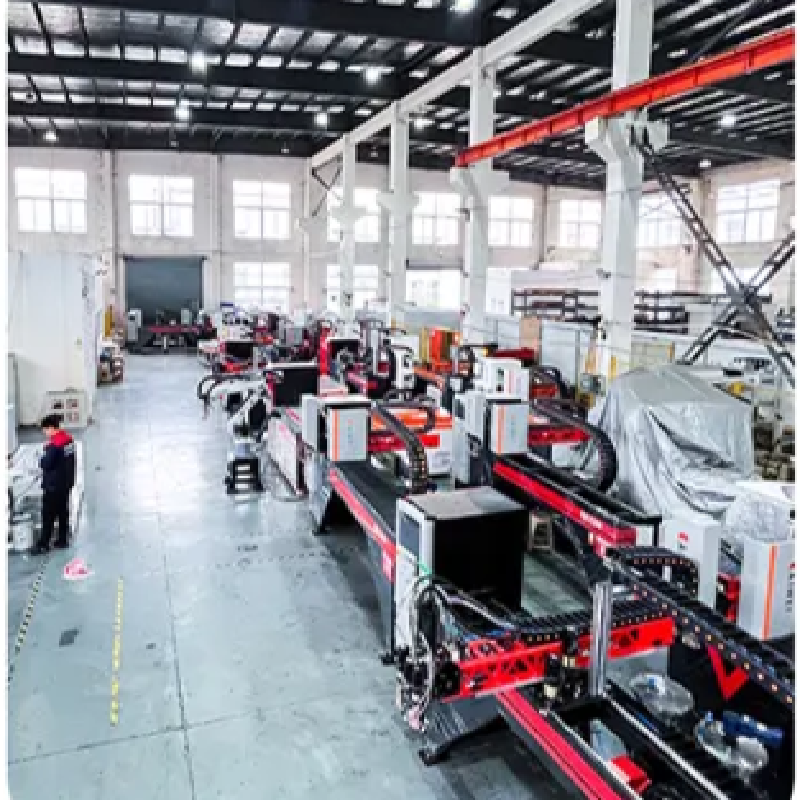
Insulation capability is essential in production of household appliances like refrigerators, water heaters and freezers. The durability of polyurethane foam insulation is directly related to its energy efficiency and product itself, and operating costs are also directly affected. To ensure optimal insulation, it is important to have accurate control of parameters of high pressure polyurethane foam injection machine. With 20+ years experience in intelligent sealing and dispensing equipment, KAIWEI Technology Group knows how important it is to fine-tune parameters to achieve best insulation results. The following are most important parameters and how they affect home appliances that use insulation.
1. Injection Pressure: The Force Behind Consistent Foam Distribution
One of the most important parameters of high pressure polyurethane foam injection is injection pressure. It will reflect the ability to push foam material into cavity and uniformity of distribution of foam in insulation volume of appliance. The normal injection pressure of home appliance insulation is 10 to 20 MPa. These pressures will optimally atomize and mix of polyurethane and produce even foam density in cavity.
If there is not enough pressure, the cavity may not be completely filled and thermal bridges can develop which will adversely affect insulation performance. If pressure gets too high, however, it could cause leakage of materials or damage to appliance shell. With precision control of our equipment, foam in cavity can be distributed evenly in all directions, and it can fill cavity as completely as possible so that the thermal insulation effect is as high as possible at KAIWEI.
2. Material Temperature: Ensuring Proper Reaction Kinetics
The temperature of the polyurethane components is of great importance in the foaming reaction, especially that of the isocyanate (A component) and polyol (B component). The viscosity, reactivity and foam cell structure will be directly affected by the material temperature. The best insulation effect is obtained by keeping this material at temperature of 25°C to 45°C.
Reactions that are too slow at low temperatures lead to an incomplete expansion and to increased foam density thus lowering the insulation efficiency. If the temperature is too high, the reaction rate will be too fast which may lead to collapse of the foam or to cells of unequal size. High pressure injection machines made by KAIWEI are equipped with sophisticated temperature control system, the temperature can be maintained within ±2°C, and the material properties and the reaction kinetic are consistent.
3. Mold and Cavity Temperature: Optimizing Foam Flow and Adhesion
The flow, expansion and adhesion of the foam to the inside of the cavity of the appliance or mold is very dependent on the temperature of the mold or the cavity. In the case of home appliance insulation, the mold temperature is generally raised to 35°C to 80°C before the foam is poured to ensure uniform flow of the foam and good bond between it and the mold. The preheating of the cavity will minimize the temperature differential between the injected foam and surfaces, against the risk of premature gelling or uneven expansion.
When the temperature of the cavity is maintained at the proper level, the foam will have uniform cell structure to provide the greatest thermal resistance (R-value). It also provides good bonding with the appliance shell, and avoids delamination and the loss of insulating property. Precise preheating and temperature maintenance is possible in our integrated heating systems at KAIWEI, so that the quality of insulation remains the same over the course of the production.
4. Injection Flow Rate and Output: Balancing Speed and Quality
The amount of foam injected into the cavity and the amount of foam produced, both affect the speed of cavity filling and the uniformity of foam expansion in the cavity. In the case of home appliance insulation, the amount of injection is required to be optimized to fill the insulation completely without leaving any gap or the pressure should not be too high. Typical injection ranges from 1 to 4 grams per second, with higher rates used for larger cavities.
A controlled injection rate will minimize the turbulence and air entrapment (voids) that can result in decreased insulation effectiveness. It also enables the foam to expand evenly to have the desired density, generally between 30 to 80 kg/m³, which is required for good thermal insulation. KAIWEI's equipment is equipped with flow rate control function and high precision pumps which will guarantee repeatable accuracy of ±1% (weight test) and guarantee the output consistency.
Conclusion
The key to maximizing the insulation potential of the high pressure polyurethane foam injection machines will be parameter tuning. Controlled injection pressure, material temperature, mold temperature and injection speed ensure uniform foam density, optimal thermal resistance and long-lasting insulation properties to guarantee manufacturers the best possible results. The equipment we use has been designed in such way that it can deliver accurate control for all important process parameters and is CE, ATEX and ISO 9001:2015 certified as safe and reliable choice at KAIWEI Technology Group. Join us and get your processes to run at their best with optimized insulations and improve the energy efficiency of home appliances.