EN

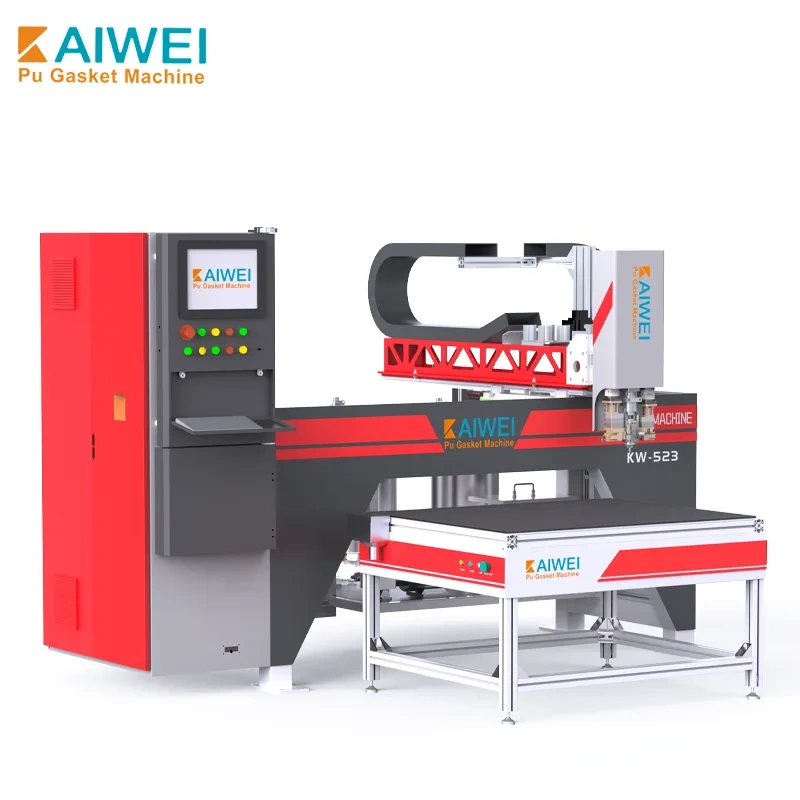
High pressure polyurethane foam injection machine is a huge capital investment. Unless it is well maintained and has a proper maintenance program, even the best equipment can fail early, and poorly maintained equipment could fail within 4 to 6 years of operation compared to 10 to 15 years for units that are well maintained. Preventive maintenance is usually 3 to 5% of the value of the equipment per annum while emergency repairs may result in losses of 15 to 20% of the value of the equipment. At KAIWEI Technology Group, we have created a full range of maintenance procedures for our customers to help them to extend the life of their equipment. Here's a maintenance schedule that's easy to follow on a daily, weekly, monthly and yearly basis.
1. Daily Maintenance: The Foundation of Reliability
The most important first step to fighting equipment failure is daily maintenance. The checks take about 10 to 15 minutes at the beginning of each shift and can save countless hours of downtime.
Check the mixing head on a daily basis; this is the heart of the injection system. Look for any residue of polyurethane and make sure self-cleaning piston can move easily. Flush mixing head with cleaning agent to avoid material crystallization if the machine has not been in use for a period of more than 15 minutes. Check all hoses and fittings for leaks, particularly the isocyanate line, look for the white crystalline deposits as they are signs of moisture contamination and should be addressed as soon as possible.
Check material levels, temperatures and nitrogen blanket pressure in material tanks. Operating parameters should be kept in set range: ±1°C with set point temperatures and hydraulic oil 40 to 55°C. Note pressure gage reading, if deviation from recipe setpoint is greater than 5%, the filter or pump is clogged or its efficiency has decreased.
2. Weekly Maintenance: Calibration and Filtration
Maintenance is done weekly with filter replacement and performance checks to assure a consistent foam quality. Allow about 30 to 45 minutes to complete these tasks.
Remove and check the 80 to 120 mesh inline filters of both A and B components. Humid climates cause isocyanate filters to plug up quickly because water combines with MDI to create solid particles of urea. Replace Filters if the pressure drop is more than 3 bar. Check the output ratio of the metering pump using graduated cylinders, and the ratio should be within ±2% of deviation from your recipe.
Measure and record the temperature by using an IR thermometer, at the mixing head, to do temperature calibration spot checking. The reading should match within ±2°C to the reading on the controller; temperature drift will cause foam density and uniformity of cells to change. Check all safety interlocks, emergency stops and proximity switches. Record all tests on your maintenance log for reference.
3. Monthly Maintenance: Component Inspection and Replacement
Monthly maintenance takes care of the wear of the components, which is a gradual process that affects the performance of the equipment. These inspections will take 2-4 hours of planned downtime.
Change mixing head seals (O-rings and piston seals) that are usually replaced every 3-6 months depending on production rate. Check the bore on the mixing chamber and take measurements for piston fit to bore, it is about ≤0.02-0.03mm. If there is an over-clearance, there is an issue with the mixing chamber liner or the piston needs to be replaced.
Service hydraulic system (clean return line filters and check oil condition). Laboratory analysis costs $25 to $60 and saves $800 to $3,000 in the replacement of the valves that could be caused by fluid contamination; test hydraulic fluid for particulate count, water content and viscosity. Check and tighten terminal connections in electrical cabinets, and dust them.
4. Annual Maintenance: Comprehensive Overhaul
The annual maintenance will make the machine work best for the entire service life. Schedule this service during downtime of the plant.
Change all hydraulic fluid every 2,000 operating hours or annually, using only the grades recommended by the manufacturer. Metering pump seals and check valves for all services important to ratio accuracy. Check and replace any high-pressure hose that's worn or cracked, hose failures are unexpected, and can be hazardous.
If the equipment is to be down for medium periods (7 days to 3 months), it is recommended to start the equipment every 7 to 10 days, pumping materials through the isocyanate circuit under high pressure for 5 to 10 minutes, allowing no precipitation or crystallization in the system. If long term downtime is to be implemented and will last for more than 3 months, flush the system thoroughly with DOP or dioctyl ester to seal all chemical lines.
Conclusion
The best method to prolong the useful life of your high pressure polyurethane foam injection machine is to maintain it properly. Whether it's daily visual checks or annual component changes, every maintenance level is crucial in ensuring smooth operations and maintaining uniform foam quality. At KAIWEI Technology Group, we offer all-round after-sales service to help you get maximum use of your equipment for many years with our "Kai Yixue" mini program and on-site training service. Partner with us to keep your equipment dependable and your investment secure.