EN

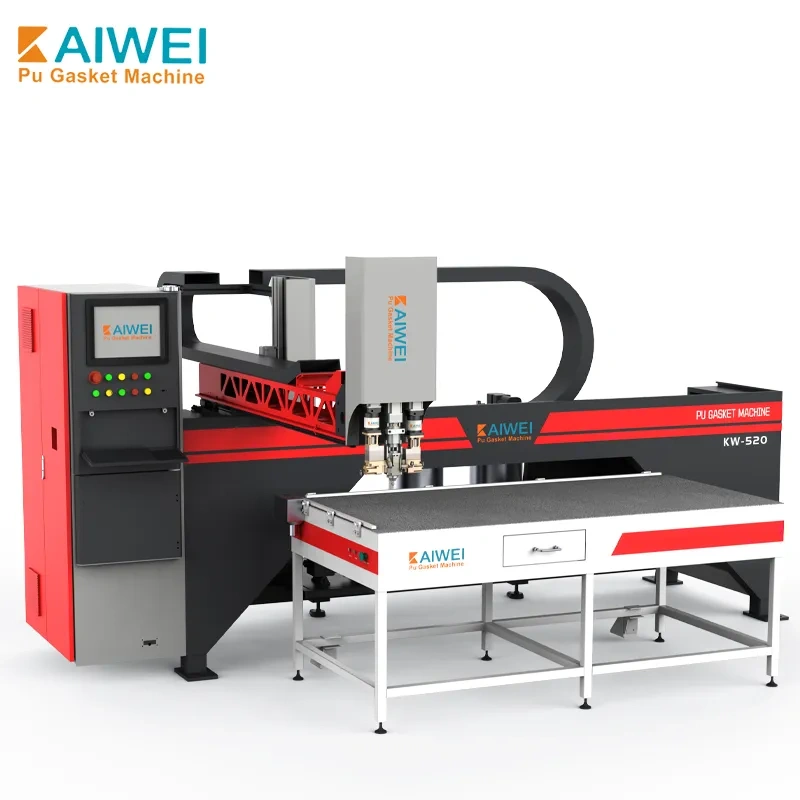
From electrical cabinet manufacturing to automotive components, defective gaskets are a significant issue driving production waste, rework and failures in the field. Manually applied gasket metering techniques such as pre-cut strips of rubber and hand-mixed foams add variability directly tied to defect rates. The automatic gasket sealing machines, which take advantage of the Foam-In-Place Foam Gasket (FIPFG) technology, are about to alter all that in favour of precision-controlled and repeatable process. The fault reduction is not an incremental but a transformative process.
Precision Metering and Mixing Eliminates Material Variability
The most frequent cause for a defect in PU foam gasket is a defective mixing process of the materials. Two component polyurethane systems should have a strict A to B ratio (usually between 1:1 and 10:1 depending upon the formulation). Manual mixing always leads to ratio errors that impact on the hardness, density and curing characteristics of the foam. Precision metering pumps remove this variable by performing automatic systems. Traditionally, Barmag metering pumps (used in industrial dispensing equipment) are predominantly of German origin and are able to deliver a consistent pumping dose, thus ensuring the accuracy of the material being dispensed even if the operator lacks experience. What this ends up meaning is that every gasket is manufactured of the same material composition, and is gasket after gasket.
Technology combination also plays a role. Two-component working systems that include very reactive materials are precisely homogenized using dynamic mixing systems before they get to the dispensing nozzle. This helps solve the problem of the unmixed or poor mixed material, which will cause soft spots, no foaming or adhesion failure. Automated mixing preserves the material property throughout the production run and thus eliminates defect rates due to mixing errors near to 0.Automated mixing ensures material property to remain same at the start and end of the production run, thereby automatically reducing near to zero the defect rate caused by mixing error.
Computer-Controlled Dispensing Paths Eliminate Geometry Errors
Inconsistent gaps, overlaps, gasket width and broken contours are the second group of defect types. Manual application requires that the operator hold the sealing piece stable at constant speed and distance from the sealing target; this is hard to achieve, if at all possible, in 2-D and 3-D sealing designs. This variability is avoided with the use of automated systems featuring CNC-controlled dispensing paths.
Today's state-of-the-art gasket sealing machines are equipped with the industrial computer (IPC) control system which imports CAD drawings directly, frequently via USB ports with embedded AutoCAD drawing functionality. The machine is programmed to follow strict paths with an accuracy of ±0.05mm, usually, which is considered a high accuracy. With this precision, gaskets can be installed precisely in exactly the way they are intended, with a width (usually 6-30mm) that is consistent over time and a perfect start-end relationship. The open spots and edges which arise on the seal during hand insertion are eliminated, creating a major defect pathway in the process, with controlled overlap programming.
This is the crucial feature for making complex parts with high tolerances. Thus, for molded foam sealing of large components with a high width to height ratio, manufacturers had previously to deal with fit errors and waste, due to the need for manual die-cutting. With automated FIPFG application, all these manual activities are avoided, ensuring the highest level of process quality.
Automated Cleaning Prevents Cross-Contamination Defects
A frequently cited defect source in a production system is Cross-contamination between production runs. Defective gaskets are generated because of registered cured foam in mixing heads, partially cured foam in nozzles and degradation of material from lengthy periods of time with the valve being left open. This is tackled with automatic sealing machines that have built-in cleaning mechanisms.
The industry standard water cleaning is accompanied by an air-blow drying. The result of this process is: No solvent use, automatic functioning in programmed time and no material accumulation that could cause nozzle blockage, uneven dispensing and changes in material properties. The cleaning cycle can be used without involving any operators, resulting in consistent cleanliness even during shift changes, breaks or when an operator is not concentrating. Obviously, this is important for production lines where temperature changes have an impact on the reactivity of the materials being handled; with clean and consistent areas, the deterioration of the material should not cause materials to contaminate later runs.
In high volume production, the ability to keep the mixing head clean and ready for long runs is directly related to the ability to limit the number of defects, since the material being used to produce each gasket is new, and in good condition. Not only are solvents not used for rinsing, there are no chemical residues from the water-rinsing process that will affect subsequent gasket adhesion.
Because it involves, as a single step, the detection of defects as they happen, this requires advanced monitoring and process control.
Automatic systems detect defects as they occur, as well as prevent defects. Modern FIPFG equipment boasts extensive quality and production control mechanisms, enabling the detection of non-conforming product without the need for manual quality checks. Temperature control units regulate the temperature of material containers as well as supply lines to maintain uniform material viscosity in every situation, thus removing another factor prone to cause development problems during manual processes.
Some automated systems include camera based quality inspection stations on the production line. Very good beats control for non-conforming parts, which are sorted out automatically, and approved components which continue without manual intervention. The integrated inspection will avoid the inspection backlog and avoid defective gaskets ending up in downstream processes or on end customers. This instantaneous defect identification not only cuts down waste but also safeguards a manufacturer's reputation and guarantees their products reach customers as certified quality.
The results of precision metering, computer-controlled dispensing, automated cleanliness and real-time inspection are significant.. Manual gasket application can have defect rates which can be more labour intensive and therefore mean that there is a requirement for significant rework, whereas automated FIPFG systems provide a quality standard that is consistent, repeatable and can save up to 90% of the production costs when compared to manual gasket application. ROI with automatic gasket sealing machines isn't just about the cost savings—it's about the reliability of products that go to the field for industries that require trusted sealing, such as electrical cabinets, automotive parts, filters and housings.